Emerging Risks of EVs and Reasons for Electric Car Insurance

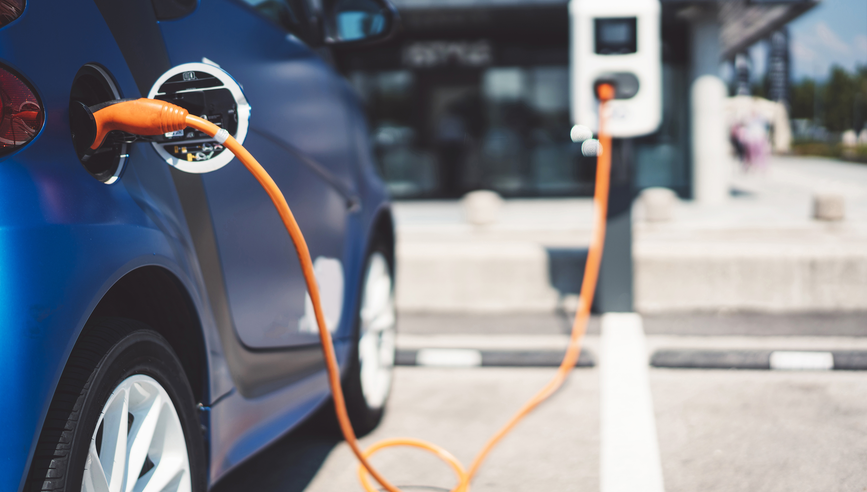
The change has been visible on the roads for several years: electric vehicles (EVs), a novelty not so long ago, represent an increasing portion of the automobile traffic we encounter each day. In the first seven months of 2025, there were 17,075 new electric cars licensed in Ireland, an increase of 64% over the same period in 2024.1 Publicly accessible charging points in Ireland rose from around 1,700 in September 2022 to roughly 2,400 in 2024—and the numbers continue to grow. To meet EU requirements under the Alternative Fuel Infrastructure Regulation, Ireland is expected to need between 3,200 and 6,210 public chargers nationwide, depending on the power provided at each charging point.2
Considering Ireland’s proposed ban on the sale of new diesel and petrol vehicles from 2030, the presence of EVs for both fleet and private use will only climb. And why not? As electric cars have continued to improve, the environmental and financial benefits of EVs have become increasingly clear to the public. A traditional car running on an internal combustion engine has a 30% efficiency rate, while a vehicle running on electricity has an 80% efficiency rate.3 An electric car owner pays less for fuel, maintenance and tax. Consumers and businesses alike are ready to buy EVs, and corporations and governments are providing incentives to encourage them.
Still, any new technology generates new risks and challenges that must be understood and managed. EVs should be thought of not simply as traditional vehicles that must be plugged in, but as batteries on wheels. Most of the batteries running electric cars are lithium-ion (Liion) batteries, which are energy-dense yet lightweight, making it possible for manufacturers to provide a powerful charge in a small amount of space. Liion batteries are commonly found in a range of other portable electronics for these reasons – and they are considered safer than many other alternatives.
Lithium-ion batteries: power and hazards
Advances in lithium-ion batteries have made the growth of EVs possible, but these batteries can generate high-profile losses due to potential safety hazards. In Ireland, the Dublin Fire Brigade has identified e-bike and scooter battery packs as ‘the fastest growing fire trend internationally’.4 The European Fire Protection Association’s Fire safety recommendations for EVs highlights that thermal runaway in lithium-ion batteries is a key concern for EV fires, and that battery fires behave differently from internal combustion engine vehicle fires.5
To be sure, fires from Liion batteries are still rare and lithium-ion technology is generally considered safer than other power sources. International research indicates that EVs are less likely to catch fire than petrol or diesel cars, though this could shift as the EV fleet grows and vehicles age.
As with anything we incorporate into our daily lives – particularly new technology – it’s important to understand the hazards EVs bring, as well as that we can do to minimise them and improve the likelihood of a safe experience.
Understanding the hazards of lithium-ion batteries
Since Liion batteries have been the source of the highest-profile losses the EV industry has faced, it makes sense to examine how the batteries generate risks.
Liion vehicle batteries are made of many smaller cylindrical or prismatic cells that are linked together to meet the required power capacity. A cell is made from an outer case (normally metal) with a hole that releases excess pressure in the event of overheating. Inside the case is a spiral that consists of three thin layered sheets – the positive cathode, the negative anode and a thin sheet of microperforated plastic separating the two. This layered spiral is submerged in an organic electrolyte.
When the cell is charging, lithium ions move through the electrolyte from the positive electrode to the negative and they do the reverse when discharging. The greater the power a vehicle needs, the more cells that are required for it to operate.
It isn’t unusual for a family’s electric car to contain many hundreds of cells, while a heavy-goods vehicle could easily contain thousands. Manufacturers and insurers must consider a number of risks associated with these batteries, including battery runaway, normally occurring vehicle damage or poor handling of cells during maintenance, fires related to charging areas, and slips, trips and falls caused by trailing cables.
Risks of thermal runaway and damaged batteries
The term thermal runaway refers to an unstoppable exothermic (heat-producing) reaction. This occurs when a Liion battery is damaged or exposed to significant heat. During the runaway, the temperature of the battery cells climbs rapidly, causing the cells in the battery to break down and release flammable gases, which, in turn, create the risk of fire and explosion. Once the cell ignites, it produces oxygen and hydrogen, further fuelling the exothermic reaction.
This is of particular concern in vehicles because once the thermal runaway is underway, it becomes difficult to fight the fire. The intense heat exposes the remaining cells in the batteries, igniting them and exposing additional cells to the heat. Extinguishing this fire poses additional challenges. While water will reduce the temperature of the battery, the exposure of lithium to water generates hydrogen, which is highly flammable and, in turn, further increases the intensity of the fire.
EV battery fires can require substantially more water than internal combustion engine car fires and may reignite hours or days later. When this kind of fire occurs in an enclosed space underground or in a carpark, the intensity of its heat can cause it to spread quickly and become all the more difficult to control. Off-gassing (release of gases from Liion batteries experiencing thermal runaway) presents an additional risk, as vapour clouds can build up in unventilated spaces and may explode. It’s important for a risk management plan for EVs to address tactics for extended cooling and reignition management.
Several factors can lead to thermal runaway and most relate to misuse or mishandling of the battery. Exposure to excessive heat could cause the cell separators to melt, releasing flammable gases. A puncture or other form of impact could crush or deform cells and lead to an internal short circuit. Excessive charging could stress the battery, while too little charge can short-circuit the battery, triggering a thermal runaway. Manufacturing defects could also lead to problems.
To minimise these risks, it’s important to store batteries properly, shield them from heat sources and physically protect batteries in use – especially those in fleet vehicles. Using them within warranty conditions and disposing of batteries in a timely way with licensed contractors is critical too.
“Although advanced battery-management systems and alerting technologies are improving safety, there’s still a lot we don’t know about how reliable these controls are in the most demanding real-world conditions,” said Brian Reilly, Regional Risk Control Manager at Travelers Europe. “Fleet charging brings its own challenges. If you consider a depot with refuse trucks charging side-by-side, a single battery fire could escalate rapidly, potentially causing a multimillion-pound loss.”
Fire hazards and electrocution risks of EVs
As the number of EV charging points climbs across the UK, they must be safely integrated into supporting construction – both new and existing. Designated public or work charging points should be fit for purpose. Further, a fire risk assessment should identify intelligent detection and alarm systems wherever EVs are parked and charged in large numbers as damage to one can quickly spread to many.
Indeed, when a fire erupted at an EV charging station in the car park of a retail store in California in September 2025, flames spread from the initial vehicle to at least two vehicles nearby.6
Collisions and charging-related risks
Businesses that operate public charging points have a range of risk mitigation factors to consider, such as:
- They must ensure the layout of the charging area reduces the risk of possible impact or collision.
- Charging of vehicles should happen away from main entry and exit points, as well as any high-traffic routes.
- Any vehicle-charging interface should be protected using crash barriers, signage and suitable separation distances to reduce the speed of a collision, along with the potential for one.
- Charging locations must be separated from any combustible materials and periodic checks must be carried out to protect safety.
The same risk management principles apply to domestic and street-side charging locations, with some additional factors to consider, such as:
- These locations should not use domestic multi-socket extension leads when charging.
- The same is true for daisy-chain extension leads, which increase the risk of an electrical fire.
- If extension leads are needed, a suitable outdoor reel cable must be used.
- Charging cables should be purchased from reputable retailers or the manufacturer and meet Irish safety standards (NSAI). They should be checked regularly and replaced if any damage is apparent.
- Charging should be done within a fire-sterile area and from a dedicated wall box charging unit installed by a licensed electrician.
Slips, trips, falls and professional liability
When selecting a charging location, consider the likely activity surrounding the area in order to limit potential hazards. It is possible that public charging areas may attract more foot traffic, for example, and will need to be inspected to minimise slips, trips and falls due to:
- Potholes
- Obstructed pathways
- Poor lighting
- Unkempt vegetation
- Snow or ice.
At street-side charging areas, owners should avoid having cables cross pavements or walkways – or manage them as well as possible by using shorter cable lengths or cable covers.
Silent operation and pedestrian safety
In Ireland, the near-silent operation of EVs poses safety concerns, according to the Road Safety Authority, which said “vulnerable road users such as pedestrians or cyclists may be less likely to hear an EV than a conventional vehicle.”7 Meanwhile, the European Blind Union highlights the absence of engine noise as a key hazard, noting that blind and partially sighted pedestrians may be at greater risk of collision with quiet EVs.8 EU regulations have responded to this concern: an Acoustic Vehicle Alerting System was mandated for all new electric and hybrid vehicles registered from July 2021. To improve detectability, the system automatically generates a sound when the vehicle is operating at speeds up to 20 km/h.9
As EV automation and driver-assistance systems become more widespread, the combination of reduced audible cues and new operational modes introduces greater liability and safety complexity. Fleet operators will have to recognise that quieter vehicles may continue to limit pedestrian awareness, requiring additional strategies—such as enhanced audio alerts, thoughtful vehicle placement and pedestrian-interaction policies—to mitigate risk.
Putting EV risks Into perspective
The early years and decades of any life-changing innovation require careful study and adjustment. While petrol-powered cars became widely available in the early 20th century, it wasn’t until the late 1920s when the automobile industry acknowledged the need for such safety measures as shatter-resistant windscreens and four-wheel brakes.
“EVs are becoming more common, but our real-world experience with their long-term use and charging environments is still relatively limited,” Reilly said. “As a result, risk-control strategies are evolving in real time. As the EVs on the road now get older, we’ll get a better understanding of the risks. For now, it’s important to have a hierarchy of controls in place to help manage potential hazards.”
When you understand the hazards, you can design better protections around them until new-and-improved replacements are available. For those purchasing EVs for personal or fleet use, that means knowing the risks of Liion batteries, caring for them properly and limiting the potential for accidents that can pose safety and financial threats.
Contact Travelers to learn more about managing EV-related risks and ensuring your business is protected with the right auto insurance coverage.
Sources
1https://www.cso.ie/en/releasesandpublications/ep/p-vlftm/vehicleslicensedforthefirsttimejuly2025/
2https://www.oireachtas.ie/en/debates/question/2025-04-09/35/ 3https://uk.smart.com/en/drive-electric/are-electric-cars-energy-efficient/
4https://www.irishtimes.com/ireland/2024/01/14/electric-bike-batteries-are-fastest-growing-fire-hazard-warns-dublin-fire-brigade/
5https://cfpa-e.eu/app/uploads/2025/06/CFPA_E_Guideline_No_44_2025_F-1.pdf
6https://ctif.org/news/fire-charging-ev-spread-multiple-car-fire|
7https://www.rsa.ie/road-safety/road-users/car-drivers/resources/electric-and-hybrid-vehicles
8https://www.euroblind.org/campaigns-and-activities/finished-campaigns/silent-cars
9https://single-market-economy.ec.europa.eu/news/electric-and-hybrid-cars-new-rules-noise-emitting-protect-vulnerable-road-users-2019-07-03_en
Travelers operates through several underwriting entities in the UK and Europe. Please consult your policy documentation or review our Regulatory Statement for more information.